Smartwatches have evolved from basic notification devices into powerful health companions, fitness trackers, productivity tools, and even style accessories. But with hundreds of models across different price ranges, buying the right smartwatch can feel confusing — especially for beginners. This smartwatch buying guide will simplify your decision
That’s why this guide breaks everything down in simple, beginner-friendly language, while still offering the depth and expertise you normally see in TechRadar, CNET, and Digit reviews.
Whether you’re buying your first smartwatch or looking to upgrade, this guide will make your decision effortless.
Smartwatch Buying Guide: What Features Really Matter?
1. First Step: Define Your Purpose
Most people buy the wrong smartwatch because they start by looking at features instead of their purpose.
Your purpose determines 90% of what smartwatch you should buy.
Let’s break it down clearly:
If your purpose is FITNESS tracking
You need:
- Accurate heart rate sensor
- Reliable step tracking
- Built-in GPS
- Multiple sports modes
- Sleep tracking
- 5ATM or IP68 water resistance
When I used a ₹2,000 watch, it added extra steps even when I was typing. But when I switched to Amazfit, the accuracy became much more realistic.
If your purpose is CALLS + NOTIFICATIONS
You need:
- Bluetooth calling
- Good microphone
- Loud speaker
- Stable Bluetooth 5.2 or 5.3
- Dial-pad + saved contacts
If your purpose is HEALTH monitoring
You need:
- SpO2
- Stress tracking
- HRV (Heart Rate Variability)
- Body temperature sensor
- ECG (premium watches only)
If your purpose is STYLE & DESIGN
You need:
- AMOLED display
- Always-On Display
- Thin bezels
- Premium metal frame
- Customizable straps
2. Display: AMOLED vs LCD — Which One Should You Choose?
Display quality changes your entire experience, especially outdoors.
⭐ AMOLED Display (Best Choice)
- Vibrant colors
- True blacks
- Better battery efficiency
- Excellent sunlight visibility
- Works with Always-On Display
TechRadar and CNET both highlight AMOLED as the superior choice for mid-range and premium watches.
⭐ LCD Display (Budget Option)
- Decent indoors
- Struggles in sunlight
- No Always-On
- Cheaper
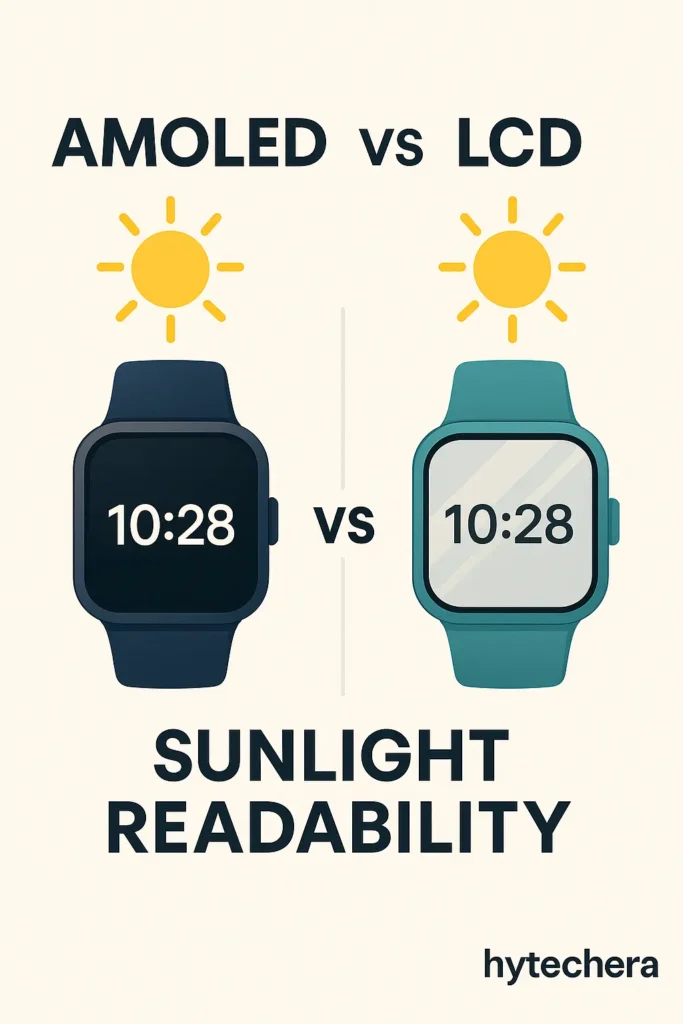
in this smartwatch buying guide, you’ll notice that display quality matters more than features.
👉 Recommendation:
- Budget under ₹3,000 → LCD is acceptable
- Above ₹4,000 → Always choose AMOLED
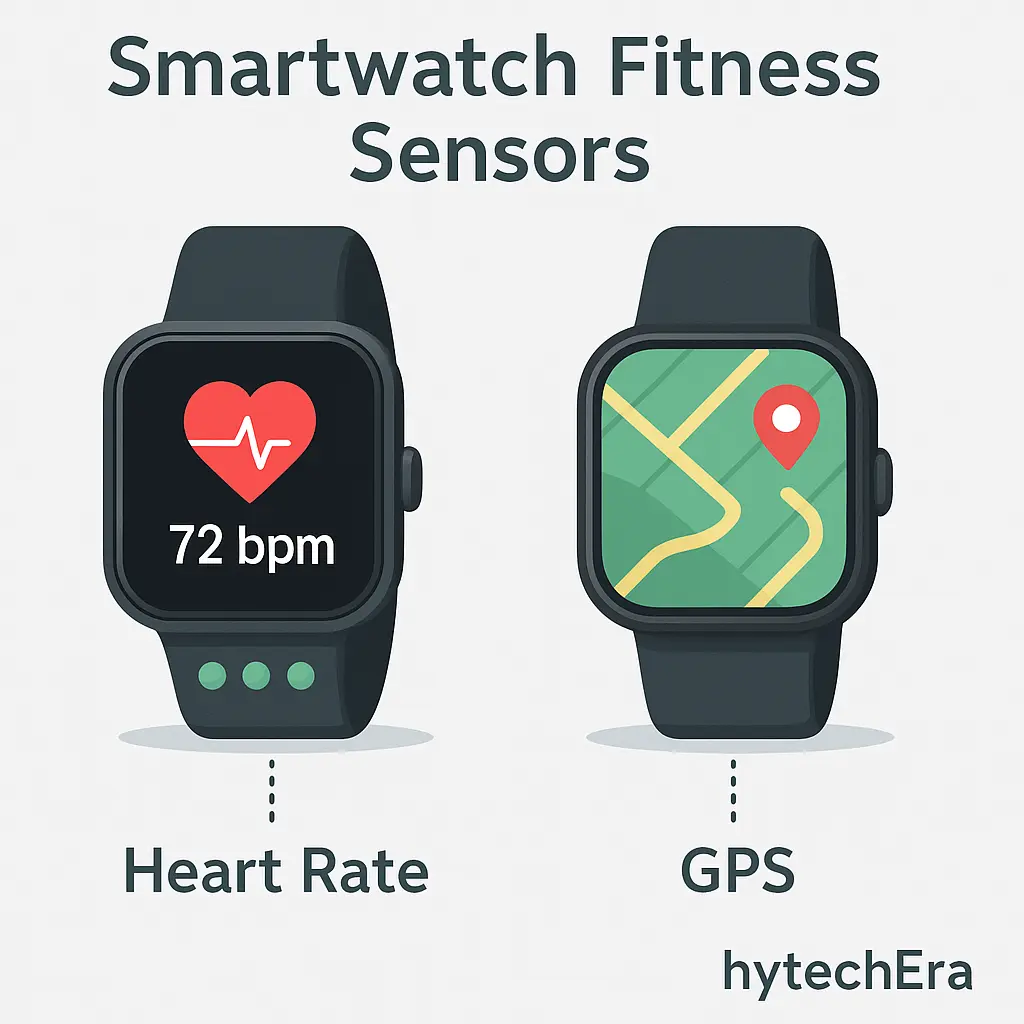
3. Fitness Tracking Accuracy — The Heart of Smartwatches
Fitness tracking is the main reason most people buy smartwatches.
But accuracy varies a lot between brands.
Good accuracy brands:
- Amazfit
- Garmin
- Fitbit
- Samsung
- Apple
Average accuracy brands:
- Noise
- Boat
- Fire-Boltt
Poor accuracy:
- Generic non-branded watches
- Extremely cheap models
Why accuracy differs:
- Sensor quality
- Algorithms
- Software updates
- App ecosystem
Cheap watches sometimes counted steps while I was riding a bike or shaking my hand. Higher-end models didn’t make this mistake.
4. Bluetooth Calling — Useful or Just a Trend?
Calling is convenient, but not essential for everyone.
✔ Choose Bluetooth calling if:
- You take frequent calls
- You drive or travel a lot
- You don’t want to pull your phone out often
✔ What to check:
- Mic clarity
- Speaker loudness
- Noise cancellation
- Bluetooth range
Tip:
Calling watches claim “7 days backup”, but in real usage they last 2–3 days.
Also read–>> 2026 Remote Work Breakthrough: AI Smart Glasses
5. GPS: Built-in vs Connected GPS
GPS accuracy can make or break your fitness data.
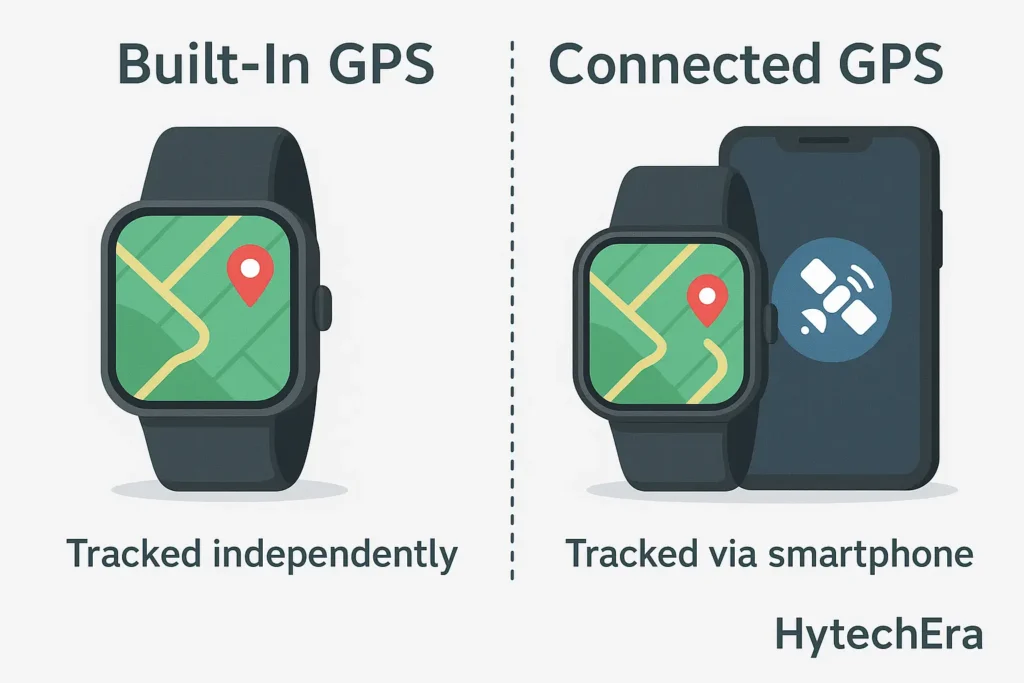
⭐ Built-in GPS
- Accurate
- Works without phone
- Best for running, trekking, cycling
⭐ Connected GPS
- Uses phone GPS
- Less accurate
- Drains phone battery
Recommendation:
If you are into outdoor activities → Choose built-in GPS.
Connected GPS once showed I walked 4 km when I actually walked only 2.8 km. Built-in GPS fixed the mismatch.
6. Build Quality, Comfort & Design
A smartwatch stays on your wrist for 16–18 hours a day.
Comfort matters more than people think.
✔ Best body materials:
- Aluminum
- Stainless steel
- High-grade polycarbonate
✔ Strap types:
- Silicone → comfortable for daily use
- Leather → office/formal wear
- Metal → premium look
Avoid:
- Heavy metal watches
- Sharp-edged straps
- Thick bezels
Also read –>> Best Gaming Smartphones in 2025 for Every Gamer
7. Battery Life: What You Should Really Expect
Most brands advertise unrealistic battery life.
Here is the real-world truth:
✔ Real battery expectations:
- Basic fitness watches → 7–14 days
- AMOLED without calling → 4–7 days
- Bluetooth calling watches → 2–3 days
- Samsung/Apple → 1–2 days
Why battery drains faster:
- Always-On Display
- GPS usage
- High brightness
- Continuous health tracking
- Frequent calls
Every calling smartwatch I tested lasted 2–3 days max, even when the brand promised 7–10 days.
8. Sleep Tracking: Only Mid & Premium Models Do It Well
Budget watches often show:
- Incorrect deep sleep
- Overestimated total sleep
- Wrong REM cycles
Best sleep tracking brands:
- Fitbit
- Amazfit
- Samsung
- Apple
If sleep data matters → avoid ₹1,500–₹2,000 models
9. Water Resistance: Know the Difference
⭐ 5ATM rating
- Swimming
- Shower
- Sauna-safe
- Best for athletes
⭐ IP68 rating
- Sweat
- Rain
- Dust
NOT suitable for swimming.
If you swim → pick 5ATM only.
10. App Ecosystem — The Most Underrated Smartwatch Feature
Your smartwatch is only as good as its app.
✔ A good app provides:
- Accurate charts
- Weekly reports
- Smooth syncing
- Lots of watch faces
- Stable notifications
Best apps:
- Zepp (Amazfit)
- Samsung Wear
- Fitbit
- NoiseFit
- Boat Crest
A bad app = poor health data + broken notifications.
11. Compatibility: Does It Work With Your Phone?
✔ For iPhone users:
Only Apple Watch gives full features.
✔ For Android users:
All Android-friendly watches work fine.
12. Which Smartwatch Should You Buy Based on Budget?
Under ₹2,000 — For beginners
- LCD display
- Basic tracking
- Notifications only
₹2,000–₹5,000 — Best value
- AMOLED
- Calling
- Good build
- Great choice for most users
₹5,000–₹10,000 — Balanced choice
- Accurate sensors
- Built-in GPS
- Good battery
- Premium feel
₹10,000–₹25,000 — Health-focused
- Fitbit
- Samsung
- Apple SE
₹25,000+ — High-end
- Apple Watch Series
- Garmin
13. Common Mistakes Everyone Makes When Buying a Smartwatch
Most beginners make these mistakes:
❌ Buying only by looks
Pretty watches often have poor accuracy.
❌ Ignoring app quality
This affects everything.
❌ Choosing LCD over AMOLED in mid-range
Huge difference outdoors.
❌ Believing “10-day battery” claims
Calling + AMOLED = 2–3 days max.
❌ Ignoring strap comfort
Uncomfortable straps ruin daily wear.
14. Best Smartwatch Type Based on User Category
Students
- Good battery
- AMOLED
- Notifications
Fitness Users
- Built-in GPS
- Accurate sensors
Office Employees
- Bluetooth calling
- Stylish design
Seniors
- HRV
- SpO2
- Easy-to-read display
Women
- Cycle tracking
- Slim design
- Temperature sensor
15. Smartwatch Buying Checklist (Save This)
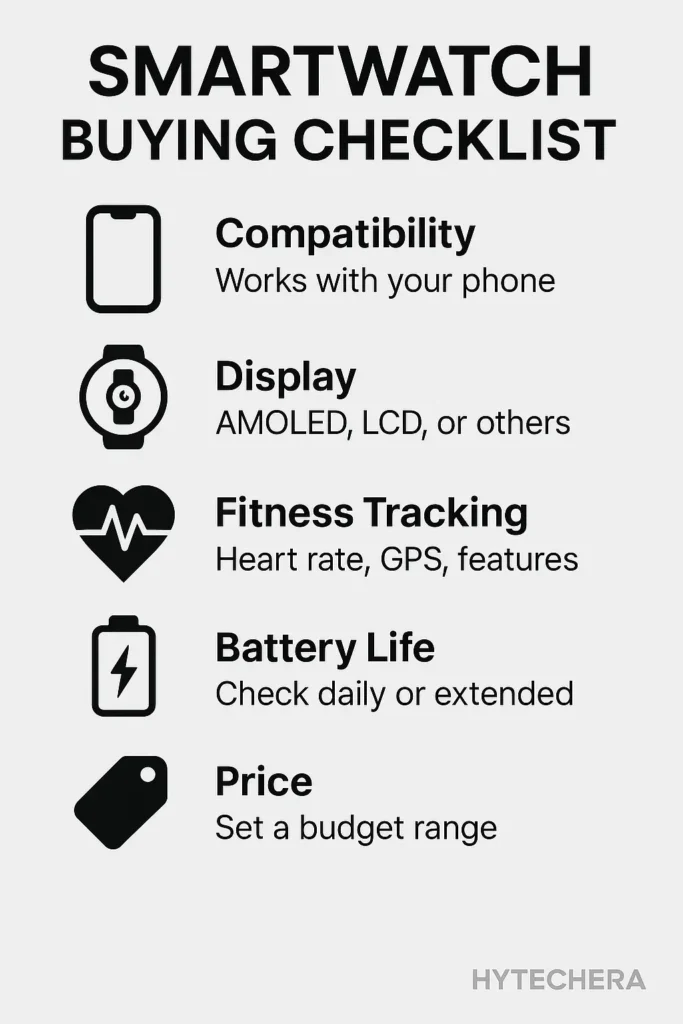
- AMOLED display
- Good battery life
- Accurate sensors
- Reliable app
- Comfortable strap
- Bluetooth 5.2 or above
- Built-in GPS (if needed)
- 5ATM water resistance
- Calling (optional)
- Clean UI
This smartwatch buying guide recommends checking the app ecosystem before buying.
Conclusion
Choosing the right smartwatch becomes simple when you understand your purpose. Once you know what you need — fitness, calling, style, or health tracking — the rest becomes easy. Focus on the essentials: display, sensors, build quality, battery, GPS, and app ecosystem.
With the right smartwatch, your daily life becomes healthier, easier, and more productive.
FAQs - Smartwatch Buying Guide 2025
- Which smartwatch is best for beginners?
Noise, Boat, and Fire-Boltt offer great beginner models.
- Which smartwatch is best for fitness?
Amazfit, Samsung, Fitbit, Garmin.
- Do I need AMOLED display?
If your budget allows — YES.
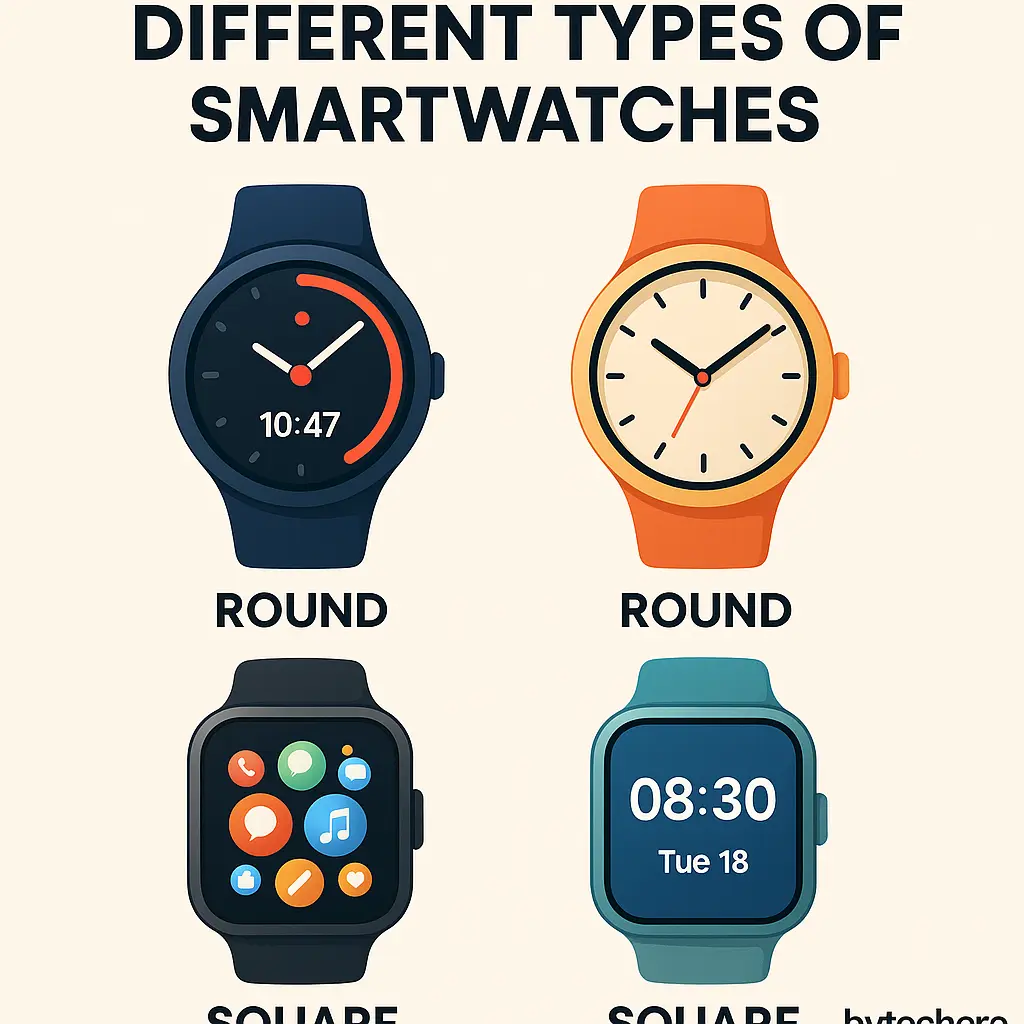
- Round dial or square dial?
Round = classic look
Square = bigger usable screen