Starting a fitness journey is hard enough. Gyms can be intimidating, personal trainers are expensive, and most people don’t know where to begin. That’s exactly where fitness apps for beginners help—they give you structure, guidance, and small daily steps instead of overwhelming routines. This guide highlights simple fitness apps for beginners in 2025 that make starting your fitness journey easier and more consistent.
In 2025, there are hundreds of workout apps, but only a few are truly simple, beginner-friendly, and effective. Some focus on intense programs or advanced tracking, which can demotivate a new user.
These apps are:
- Easy to use
- Ideal for home or minimal-equipment workouts
- Support realistic progress (not “6-pack in 7 days” nonsense)
- Available on both Android and iOS (in most cases)
By the end of this article, you’ll know exactly which app suits your current fitness level, lifestyle, and personality.
1. What to Look For in a Beginner-Friendly Fitness App
Before we jump into the list, it helps to understand what makes a fitness app good for beginners. Not every app that’s popular on the Play Store or App Store is ideal when you’re just starting out.
As a beginner, you don’t need complex gym splits, advanced heart-rate zones, or complicated performance analytics. You need clarity, consistency, and confidence. The app should help you build a habit, not confuse you with technical details.
Here are a few key things that actually matter:
- Simple, guided workouts
The app should tell you what to do today, not give you 50 plans and leave you confused. - Beginner-level routines
It should have true beginner options: low impact, shorter duration, easy movements. - Home or minimal equipment
Many beginners don’t have dumbbells or machines, so bodyweight or simple equipment plans are ideal. - Clear instructions & videos
Good form prevents injury. Video demos, voice cues, and step-by-step instructions help a lot. - Progress tracking & reminders
Gentle reminders, streaks, and progress stats keep motivation alive.
If an app nails these basics, it’s far more likely to help you stay consistent for months, not just a week.
Many simple fitness apps for beginners in 2025 include guided workouts, timers, and short routines ideal for first-time users.
According to the British Heart Foundation, beginners should focus on short, low-impact workouts when starting out.
2. Nike Training Club – Best All-Round App for Absolute Beginners
Platforms: Android, iOS
Best for: Home workouts, no-equipment routines, guided programs
Among all simple fitness apps for beginners in 2025, Nike Training Club is one of the easiest places to start. Because it feels like a structured training program, not just a library of random workouts. It offers full follow-along video workouts where trainers talk you through exercises, and many of the routines are designed specifically for people who are just starting.
What makes NTC beginner-friendly is the way it organizes training. Instead of dumping all workouts on you, it gives you programs based on your goals—getting started, getting stronger, improving mobility, or building endurance. You can choose short 10–20 minute sessions and slowly increase intensity as you get used to moving.
The app includes bodyweight-only plans, which means you can start right away without buying equipment. Most sessions include warm-ups and cool-downs, so you’re less likely to get injured if you follow along properly.
When I first tried NTC, the 10-minute mobility routine helped me ease into movement without feeling intimidated.
Why it actually works for beginners:
- Clear follow-along videos
- Short, manageable sessions
- Structured beginner plans instead of random workouts
If you’ve been hesitant to train because you don’t know where to start, Nike Training Club gives you a very safe and guided entry point.
3. FitOn – Best “Fun & Friendly” App for Busy Beginners
Platforms: Android, iOS
Best for: People who get bored easily, short fun workouts
FitOn feels less like a strict training app and more like a friendly fitness companion. It offers workouts led by instructors who are energetic and encouraging, making it easier to stay engaged even if you’re tired after work or not in the mood to exercise.
The app has plenty of beginner routines: low-impact cardio, bodyweight strength, mobility, stretching, and even relaxing sessions for stressful days. Many of the workouts are under 20 minutes, making them ideal for beginners who don’t want to commit to long sessions.
One of the best parts of FitOn is its variety. You can try dance-inspired sessions, walking workouts, pilates-style training, or just simple bodyweight circuits. This variety matters because the first struggle for beginners is not “Which exercise is optimal?”, but “How do I make exercise feel less boring?”
FitOn also includes basic progress tracking and reminders, so you can set a weekly goal like “3 workouts per week” and stick to it.
On days when I feel tired, FitOn’s friendly trainers make the workout feel lighter and more enjoyable.
Why it actually works for beginners:
- Fun, engaging trainers and classes
- Lots of short, no-equipment sessions
- Great variety to fight boredom
If you usually start working out and quit in a few days because it feels too strict or serious, FitOn is a great way to keep movement enjoyable.
4. 7 Minute Workout – Best for People Who Say “I Have No Time”
Platforms: Android, iOS, many variations
Best for: Ultra-busy beginners, starting a tiny daily habit
The 7 Minute Workout concept has been around for years, but it’s still one of the most effective ways for complete beginners to build a consistent habit. The idea is simple: short, intense-but-manageable sessions that combine bodyweight exercises into a quick circuit.
Most 7-minute workout apps guide you through around 12 basic movements like jumping jacks, wall sits, squats, push-ups, crunches, and planks. You perform each exercise for 30 seconds with a 10-second rest. In less than 10 minutes, you’re done.
For absolute beginners, this format is less intimidating than a 45-minute workout. It feels achievable, and that psychological shift is powerful. Once you get comfortable, you can repeat the circuit twice or thrice for a longer workout.
Why it actually works for beginners:
- Very low time commitment
- Simple exercises with clear timers
- Easy to start and maintain as a daily habit
If you constantly feel like you “don’t have time to work out,” starting with a 7-minute routine removes that excuse completely.
5. MyFitnessPal – Best for Weight Loss & Building Healthy Habits
Platforms: Android, iOS
Best for: Beginners focusing on fat loss, lifestyle change, calorie awareness
MyFitnessPal is more than a workout app — it’s a complete health and habit-building tool. For beginners who want to lose weight or understand their eating patterns, this app makes the process simple and surprisingly enjoyable. It allows you to track your meals, monitor calories, and get a sense of what your daily diet actually looks like.
What makes MyFitnessPal effective is how gradually it introduces structure. Many beginners overestimate or underestimate their daily intake. With this app, you start by logging your meals, and within days you’ll notice patterns: where extra calories are coming from, which foods keep you full, and what causes your energy crashes.
The app also integrates basic workouts and activity tracking, so you can combine nutrition + beginner exercise. You can walk, jog, or do simple home workouts and track everything in one place, which is convenient for first-timers.
Why it actually works for beginners:
- Helps build awareness of food habits
- Easy to track meals with barcode scanning
- Combines diet + workouts for balanced results
If your main goal is weight loss or gaining control over your eating routine, MyFitnessPal will guide you better than any standalone workout app.
6. Strava – Best for Walking, Running & Outdoor Beginners
Platforms: Android, iOS
Best for: Walking, jogging, cycling, outdoor motivation
Strava is the perfect app for beginners who prefer walking or running over structured gym workouts. Instead of forcing you to follow specific routines, Strava tracks your activity, routes, distance, pace, and progress in a very clean and motivating way. Strava also ranks high among simple fitness apps for beginners in 2025 because walking is the easiest entry point.
Its biggest advantage is the community element. You can join groups, participate in monthly challenges, or simply see how other beginners are progressing. This external motivation helps a lot, especially for people who need a nudge to stay consistent.
Also read –>> How to Get Fit at Home with Zero Equipment
Strava doesn’t push advanced analytics onto beginners. You can just start walking with your phone in your pocket, and the app tracks everything with almost no setup. Over time, you’ll naturally start moving more, exploring new routes, and getting fitter.
I personally use Strava for evening walks, and seeing my weekly progress motivates me to stay consistent.
Why it actually works for beginners:
- Very motivating, community-driven
- Tracks walking/running accurately
- Perfect for people who dislike structured workouts
If you’re someone who prefers simple movement over exercise videos, Strava is hands-down the easiest way to stay active.
7. How to Start a Beginner Fitness Routine (First 30 Days)
Most beginners fail not because they lack motivation, but because they don’t know how to structure their routine. Fitness apps are great, but you must use them correctly for the best results. A 30-day plan gives your body enough time to adapt and build momentum.
Start with short sessions. In the first week, focus more on getting used to movement rather than intensity. Apps like Nike Training Club and FitOn provide 10-15 minute sessions designed specifically for people who haven’t exercised in a while.
In week two, aim for more consistency—3 to 4 sessions a week. Mix different types of workouts: strength, mobility, stretching, and light cardio. This keeps your body balanced and reduces injury risk.
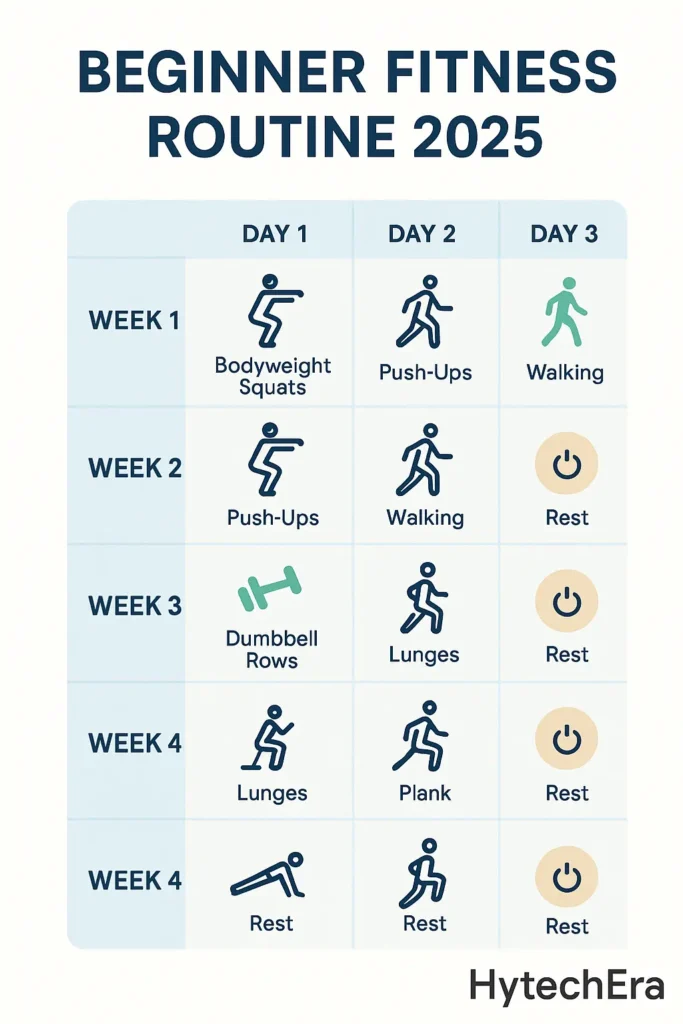
During the third and fourth weeks, you’ll start noticing improvements in strength, flexibility, and energy levels. This is where most beginners feel motivated to continue. Keep workouts simple and repeatable rather than chasing harder plans too soon.
In my first month, even 15-minute sessions made a big difference in my energy levels.
Simple 30-day beginner flow:
- Week 1: 10–15 mins, 3 days
- Week 2: 15–20 mins, 3–4 days
- Week 3: Add a walk or mobility day
- Week 4: Maintain consistency + rest days
The goal is not perfection — the goal is habit.
8. Common Beginner Mistakes & How to Avoid Them
When you first start exercising through apps, it’s easy to pick routines that look exciting but are too advanced. Resist that temptation. Overtraining or choosing high-intensity sessions can lead to soreness, demotivation, or even quitting after a few days.
Another common mistake is relying only on the app without understanding proper form. Always watch the demo videos for new exercises. Good form reduces injury risk and improves results.
Skipping rest days is also a mistake. Beginners often feel motivated during the first week and exercise every single day. But your body needs recovery. Overtraining leads to fatigue and stalls progress.
The most common beginner mistakes:
- Choosing advanced workouts too early
- Ignoring warm-ups and cool-downs
- Exercising every day without rest
- Not tracking progress
- Giving up too soon
Fixing these habits early makes your fitness journey smooth and enjoyable.
Harvard Health also recommends warming up properly to avoid injuries during beginner workouts.
9. How to Stay Motivated Using Fitness Apps
Staying motivated is often the hardest part for beginners. Installing a fitness app is easy, but opening it consistently—especially when you’re tired or stressed—is where most people struggle. The good news is that fitness apps are designed with behavior psychology in mind. If you use the right features, staying motivated becomes much easier.
Start by turning on reminders. It may feel simple, but a timely notification saying “Ready for today’s 7-minute workout?” creates a small push you didn’t have before. Many apps also allow you to set weekly goals. Instead of aiming for “every day,” pick something realistic like three workouts per week.
Another helpful approach is tracking small wins. Apps like Strava or NTC show you streaks, badges, or progress charts. Watching your consistency grow day by day is surprisingly motivating—your brain responds to visible progress.
Also read–>> How to Stay Safe on Public Wi-Fi (2025) if you use fitness apps outdoors.
You can also make workouts social. Join free challenges, invite a friend, or share your achievements inside the app community. Seeing others at your level makes the journey feel less lonely.
Tracking small wins like my walking streak helped me stay accountable.
Simple motivation boosters:
- Turn on reminders
- Set weekly goals, not daily perfection
- Track your streaks and small wins
- Join challenges or groups
- Choose workouts you actually enjoy
Consistency matters more than intensity when you’re just starting out.
Conclusion — Which App Should You Start With?
If you’re overwhelmed by choices or unsure where to begin, pick one app from this list and simply start with 10 minutes a day. Don’t worry about being perfect. Don’t worry about advanced routines. Focus on consistency.
- Choose Nike Training Club if you want structured, guided programs.
- Choose FitOn if you enjoy fun, friendly workouts with variety.
- Choose 7 Minute Workout if you’re extremely busy.
- Choose MyFitnessPal if you want to lose weight or improve eating habits.
- Choose Strava if you love walking or jogging outdoors.
These simple fitness apps for beginners in 2025 make it possible to stay consistent without expensive gym memberships. These apps make it easy, safe, and enjoyable for beginners. Start small, stay consistent, and build momentum—your body will thank you.
FAQs — Beginner Questions Answered
- 1. Are these apps really suitable for complete beginners?
Yes. All five apps in this list include true beginner-level workouts, simple movements, and short sessions.
- 2. Do I need equipment to start?
No. Nike Training Club, FitOn, and 7 Minute Workout require zero equipment. You can start with just a mat or a soft floor.
- 3. Will these apps help with weight loss?
They help you build the habit of movement. Combined with MyFitnessPal for food tracking, beginners see steady results.
- 4. What if I have very little time?
Try the 7 Minute Workout. It’s perfect for busy students or working professionals.
- 5. Can I get injured using these apps?
Only if you ignore form or skip warm-ups. Follow the video demos and choose beginner-level routines.
- 6. Is the free version enough?
Yes. All five apps have strong free plans. Upgrading is optional, not necessary.