How apps decide what you see in Reels, Shorts, and feeds is driven by watch time, engagement, and your daily behavior.
Have you ever noticed this?
You open Instagram and immediately see Reels you actually enjoy.
You open YouTube Shorts and somehow the videos feel perfectly matched to your mood.
Scroll Facebook or X, and the posts feel different again.
This is not coincidence — and it’s not random.

Popular apps like Instagram, YouTube, Facebook, TikTok, and X use ranking systems (often called algorithms) to decide what content appears first in your feed. These systems don’t show content equally to everyone. Instead, they prioritize content based on how they think you will react.
In simple terms:
Apps don’t show the “best” content — they show the content you’re most likely to engage with.
How Apps Decide What You See in Feeds and Reels
Years ago, feeds were chronological — newest post appeared first.
That changed because users started missing content and spending less time on apps.
So platforms switched to interest-based ranking, where the goal is simple:
Keep you scrolling longer.
To do that, apps constantly answer one question:
What should we show this user next so they don’t close the app?”
Everything else — Reels, Shorts, feeds, recommendations — flows from this.
The Core Signals Apps Use to Rank Content
Even though platforms don’t reveal full algorithms, they openly confirm the types of signals they use. These signals are very similar across apps.
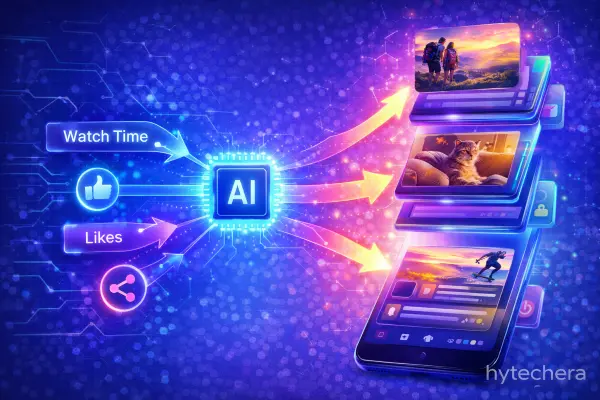
1. Watch Time (Most Important Signal)
How long you watch something matters more than likes.
- Do you watch a Reel till the end?
- Do you rewatch a Short?
- Do you pause or skip quickly?
Longer watch time tells the app:
“This content is interesting to this user.”
So similar content gets shown again.
2. Interaction Signals
Apps closely track what you do after seeing content:
- Likes
- Comments
- Shares
- Saves
- Profile visits
Even negative signals matter:
- Scrolling away fast
- Tapping “Not interested”
- Muting creators
All of this trains the feed.
3. Content Type Preference
Apps learn what format you prefer:
- Reels vs posts
- Shorts vs long videos
- Images vs text
- Topics (tech, fitness, comedy, news)
If you interact more with Reels, the app gradually pushes Reels higher in your feed.
Reels, Shorts & Feeds — Why They Behave Differently
Although the logic is similar, each format has a different priority.
- Reels / Shorts → discovery + entertainment
- Main feed → familiarity + relevance
- Stories → relationship-based ranking
That’s why:
- Reels show creators you don’t follow
- Feeds show people you interact with
- Stories prioritize close connections
From my own experience, when I spent a few days watching tech Reels fully and saving some, my Instagram feed quickly shifted toward tech creators — even without following them. YouTube Shorts behaves similarly, but adapts even faster based on watch duration alone.
This shows how powerful watch behavior is compared to likes.
Also read –>> How to Create Viral Instagram Reels Using Only Your Phone
What This Means for Users
You are actively training your feed, whether you realize it or not.
Every scroll, pause, skip, or interaction sends a signal.
So if you ever feel:
- “My feed is boring”
- “I keep seeing irrelevant content”
It’s usually not the app’s fault alone — it’s a reflection of past interactions.
How Apps “Test” Content Before Showing It Widely
When a new Reel, Short, or post is uploaded, apps usually don’t push it to everyone immediately. Instead, they run small experiments.
Here’s what typically happens behind the scenes:
The app shows your content to a small group of users who are likely to be interested based on past behavior. This group is carefully chosen, not random.
The app then watches very closely:
- How long people watch
- Whether they skip instantly
- Whether they rewatch
- Whether they interact or move on
If the signals are strong, the content is shown to a slightly larger group.
If signals weaken, distribution slows or stops.
This step-by-step expansion is why:
- Some videos suddenly take off after hours
- Some posts die quietly without explanation
This explains how apps decide what you see first instead of showing content randomly.
Why Watch Time Beats Likes and Comments
Many users believe likes are the most important signal. In reality, watch time is far more powerful.
From an app’s perspective:
- Likes can be tapped easily
- Watch time requires real attention
If users consistently watch a Reel till the end, the app assumes:
“This content is genuinely interesting.”
That’s why short, engaging videos often outperform long or slow ones — especially in Reels and Shorts.
YouTube confirms that watch time and user interest signals strongly influence recommendations.
Also read –>> Best Android Apps That Work Offline in 2026
Why New Creators Sometimes Go Viral
This is one of the most misunderstood things.
New creators are not blocked by algorithms. In fact, platforms often give new accounts initial exposure to understand:
- What type of content they create
- Which audience reacts best
If early videos get strong watch-time signals, the system quickly pushes them further — sometimes leading to sudden viral reach.
If signals are weak, reach gradually declines.
This explains why:
- A new account can go viral
- An old account can struggle if engagement drops
Instagram has publicly explained that feed ranking relies heavily on user engagement and viewing behavior.
Why Your Feed Changes Suddenly
Have you ever felt like your feed “reset” overnight?
That usually happens because:
- You interacted with a new topic repeatedly
- You watched several videos fully
- You ignored or skipped certain content consistently
Apps adapt faster than most users realize. In some cases, feeds can shift noticeably within a single day.
Reels vs Shorts — Speed Difference Matters
Different platforms adapt at different speeds:
- YouTube Shorts adapts extremely fast based on watch time
- Instagram Reels balances watch time with saves and shares
- Facebook feed prioritizes relationship signals more
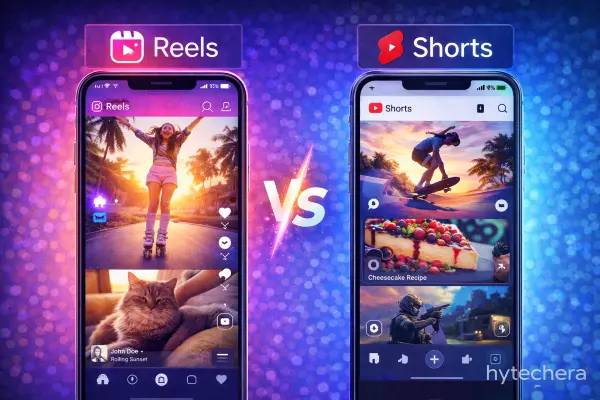
This is why content strategy varies across platforms, even though the core logic remains similar.
In my own usage, I’ve noticed that YouTube Shorts adjusts recommendations almost immediately after I binge-watch a certain topic, while Instagram takes a little longer but becomes more stable once it learns preferences. This difference explains why Shorts often feel more “reactive.”
What Users Should Understand at This Point
The feed is not judging content quality in a human sense.
It’s measuring predicted engagement probability.
Apps are not asking:
“Is this good content?”
They’re asking:
“Will this user likely engage with it?”
That distinction changes everything.
How Your Daily Behavior Shapes Your Feed
Every small action sends a signal. Even actions you don’t consciously notice.
For example:
- Watching a video till the end = strong positive signal
- Skipping in the first 2 seconds = strong negative signal
- Saving a post = long-term interest signal
- Commenting = engagement signal
- Sharing = high-value signal
Over time, these signals compound. That’s why feeds don’t change instantly — they evolve.
Why “Shadow Ban” Is Often a Myth
Many users believe their reach dropped because of a shadow ban. In most cases, this isn’t true.
What usually happens instead:
- Engagement patterns change
- Audience interest shifts
- Content no longer matches what users watch till the end
From the app’s point of view:
If fewer people watch or interact, there’s less reason to push the content further.
This looks like a penalty, but it’s actually data-driven adjustment, not punishment.
How to Reset or Retrain Your Feed
If your feed feels irrelevant or repetitive, you can slowly retrain it.
Here’s how apps typically respond:
- Interact intentionally with content you want more of
- Skip or mark “Not interested” on content you don’t enjoy
- Avoid hate-watching or doom-scrolling (it still counts as engagement)
Within a few days, most platforms will begin shifting recommendations.
What Apps Will Never Show You First
Understanding this is important.
Apps generally avoid prioritizing:
- Content that gets skipped quickly
- Posts with low watch completion
- Repetitive or copied material
- Content that users frequently mute or hide
This is why originality and relevance matter — even at the algorithm level.
I’ve personally noticed that when I stop watching certain types of videos completely — even without tapping “Not interested” — those topics slowly disappear from my feed. This confirmed for me that lack of engagement is just as powerful as negative feedback.
Also read –>> Google Play Services Battery Drain: Why It Happens & How to Stop It
Why This Matters Beyond Social Media
The same recommendation logic now influences:
- News apps
- Shopping apps
- Streaming platforms
- Search results
Algorithms are no longer just ranking content — they’re shaping information exposure.
Understanding how feeds work helps users:
- Consume content more intentionally
- Avoid endless scrolling traps
- Regain control over attention
Final Takeaway
Popular apps don’t decide what you see based on popularity alone.
They decide based on predicted personal interest.
Your feed is a mirror — not of who you are, but of how you interact.
Once you understand this, feeds stop feeling mysterious and start feeling manageable.
Understanding how apps decide what you see helps you control your feed instead of being controlled by it.