Budget phones vs flagships is no longer a simple comparison, as budget devices are now improving faster due to market and software shifts.
Five years ago, the narrative was simple:
Flagship phones — the most expensive models — were unquestionably the pinnacle of mobile tech. Cutting-edge processors, top-tier cameras, premium materials. Everything about them screamed “best of the best.”

But in 2025 and beyond, something surprising has happened:
Budget phones are improving faster than flagship models.
And not just incrementally — in some areas, budget devices are closing the gap at a pace that would have seemed impossible a few years ago.
This article isn’t a spec comparison. It’s an industry shift explainer .— about how market forces, component economics, distribution strategies, and user priorities are reshaping what “good” means in a smartphone.
By the end, you’ll understand:
- Why budget phones are improving faster than flagships
- Where this trend came from
- What it means for buyers and the industry alike
And you’ll see that it’s not just about price — it’s about where innovation is actually happening now.
The Old Smartphone Hierarchy — And Why It Broke
Traditionally, smartphone tiers looked like this:
- Flagship: highest performance, best camera, premium materials
- Mid-range: compromise between performance and price
- Budget: basic functionality, limited features
Flagships were the headline winners — they set the pace for new technology. Everyone else caught up later.
Today, that is no longer strictly true.
Why This Trend Isn’t Random — It’s Economic Reality
Modern flagship phones often cost $900–$1,500+. But parts that used to be expensive — high-resolution displays, capable processors, multi-lens cameras — have dropped dramatically in price for mainstream manufacturers.
This has two big effects:
- Flagship features become affordable faster
What was cutting-edge in 2021 is mainstream in 2025. Component costs drop quickly for high-volume suppliers, especially those serving budget tiers. - Flagship innovation slows down in certain areas
Once resolution thresholds are reached (e.g., 108 MP cameras or 120 Hz screens), upgrades become incremental. Upgrading a flagship from 120 Hz to 144 Hz or from 108 MP to 200 MP doesn’t move the needle the same way foundational improvements used to.
Meanwhile, budget phones are adopting these once-premium features quickly because their cost has dropped.
This pattern has been noted across smartphone analysis and editorial commentary.
Industry analysis from Tom’s Guide also points out how budget phones now deliver everyday performance close to premium models.
Component Cost Curves
One of the biggest reasons budget devices are improving fast is economies of scale in smartphone component manufacturing.
For example:
- Mid-range SoCs are now built on the same lithography nodes as early flagship chips.
- Camera sensors are mass-produced for mid-tier devices, driving down costs.
- Displays are sourced in huge volumes for a wide range of price tiers.
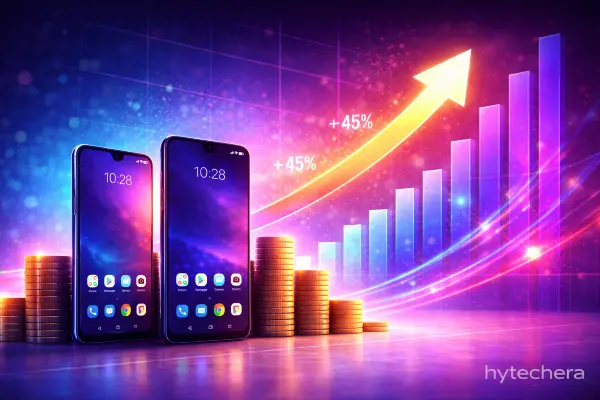
This reduces the incentive for flagships to push huge leaps — everyone already benefits from shared cost reductions.
Features that used to be exclusive to flagship phones are now cheap enough to include even in low-cost devices.
This economic shift helps explain why budget phones can feel “closer” to flagships even at a fraction of the price.
Many long-time smartphone users report that a well-selected budget phone today can handle everyday tasks, gaming, and multimedia nearly as smoothly as last generation’s flagship models.
For many users — especially outside specialist tech circles — this blurs the lines between budget and premium.
This isn’t nostalgia or speculation — it’s an observation supported by user feedback, performance benchmarks, and industry surveys.
Performance Has Reached “Good Enough” for Most People
A few years ago, performance gaps were obvious. Budget phones stuttered, lagged, and struggled with everyday apps. Flagships felt dramatically faster.
That gap has largely closed.
Modern budget phones now use:
- Efficient mid-range chipsets
- Faster storage standards
- Optimized operating systems
For common tasks — social apps, streaming, browsing, payments — the difference between a budget phone and a flagship is often invisible to the average user.
Meanwhile, flagship performance improvements now target edge cases:
- Heavy gaming
- Advanced camera processing
- AI-driven features
For most users, these gains are incremental, not transformational.
This creates a situation where budget phones show obvious year-over-year improvement, while flagships feel “almost the same” as last year’s models.
This trend shows how budget phones vs flagships has become a question of value, not raw power.
Displays and Design: The Gap Closed Quietly
High refresh rate displays used to be a flagship hallmark. Today, even affordable phones ship with:
- 90Hz or 120Hz panels
- OLED screens
- Slim bezels and premium finishes
These changes are highly visible. When users upgrade from an older phone to a new budget device, the improvement feels dramatic.
By contrast, flagship displays are now competing on fine details:
- Slight brightness increases
- Marginal color accuracy gains
- Minor refresh rate tweaks
Important? Yes.
Noticeable to most users? Often not.
Cameras: Smart Software Beats Expensive Hardware
Flagships still lead in camera hardware, but software has become the equalizer.
Budget phones increasingly rely on:
- Computational photography
- AI-based scene detection
- Multi-frame processing
These techniques dramatically improve photos without requiring the most expensive sensors.
As a result:
- Daylight photos from budget phones look “good enough” for social media
- Video stabilization has improved across all tiers
- Night mode, once exclusive, is now standard
Flagships still win in edge conditions — but budget phones are improving faster because they’re climbing from a lower baseline.
Budget Phones vs Flagships: Why Flagship Improvements Feel Smaller
This isn’t because companies stopped innovating. It’s because flagships are already near the top of the curve.
Once you reach:
- Ultra-fast performance
- Excellent cameras
- Premium materials
Each improvement becomes:
- More expensive
- Less noticeable
- Harder to market
That’s why flagship launches increasingly focus on:
- Ecosystem features
- AI integration
- Design refinements
- Brand experience
These matter — but they don’t create the same “wow” factor as the leap budget phones make each year.
From everyday usage, many people now upgrade from a 3- or 4-year-old phone to a new budget device and feel a huge jump in speed, display smoothness, and camera quality.
But users upgrading from last year’s flagship often describe the change as subtle.
What This Means for Buyers
This trend doesn’t mean flagships are bad. It means:
- Budget phones are improving where it matters most
- Flagships are refining, not reinventing
- Value perception has shifted dramatically
Why Manufacturers Are Betting More on Budget Phones
Smartphone growth in premium markets has slowed.
In many regions:
- Users keep flagships for 3–5 years
- Incremental upgrades don’t justify high prices
- Trade-in cycles are getting longer
But in the budget and lower-midrange segment, demand is still strong.
That’s where:
- First-time smartphone buyers exist
- Users upgrade more frequently
- Volume sales happen at scale
Also read –>> Smart Gadgets Under 5000 in India (Best Picks for 2026)
From a manufacturer’s point of view, improving budget phones delivers faster returns than pushing flagships slightly further up an already crowded peak.
his ongoing debate around budget phones vs flagships is now driven more by real-world usage than raw specifications.
Emerging Markets Are Driving Innovation Speed
A huge part of this shift comes from markets like:
- India
- Southeast Asia
- Parts of Africa
- Latin America
In these regions:
- Budget phones are the primary smartphones
- Users demand long battery life, smooth UI, and decent cameras
- Value matters more than brand prestige
As a result, manufacturers optimize aggressively for:
- Performance per dollar
- Battery efficiency
- Software smoothness on modest hardware
This pressure forces rapid innovation in budget tiers — much faster than in flagship categories, where expectations are already extremely high.
Why Software Optimization Matters More Than Ever
One of the biggest reasons budget phones feel better today is software maturity.
Android, chip drivers, and app optimization have all improved dramatically.
Manufacturers now:
- Tune software specifically for mid-range chips
- Reduce background bloat
- Use AI features selectively instead of universally
This means budget phones don’t need flagship hardware to feel responsive.
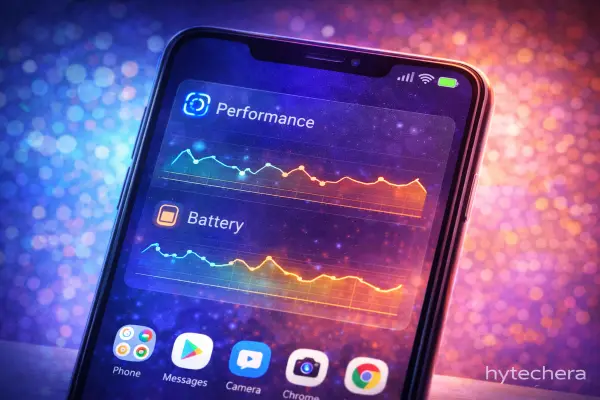
Flagships, on the other hand, often use their extra power for:
- Advanced AI features
- High-end camera processing
- Ecosystem integration
Useful — but not always visibly transformative.
From real-world usage, many users I’ve observed are now more satisfied upgrading to a well-optimized budget phone than spending double or triple on a flagship with marginal improvements. The excitement comes from visible progress, not prestige.
That shift in satisfaction is one of the strongest indicators that the market has changed.
Also read –>> Why App Sizes Keep Increasing Every Year
What This Means for the Future of Flagships
Flagships aren’t disappearing.
But their role is evolving.
They are becoming:
- Technology showcases
- Ecosystem anchors
- Premium experience products
Meanwhile, budget phones are becoming:
- The real innovation battleground
- The fastest-improving devices year over year
- The place where most users feel progress
This doesn’t diminish flagships — it redefines them.
Final Takeaway
Budget phones are improving faster than flagships because:
- Core smartphone technology has matured
- Component costs have dropped
- Software optimization has leveled the playing field
- Manufacturers chase volume and visible impact
Flagships polish the future.
Budget phones deliver the present.
And for most users today, that makes all the difference.
Understanding budget phones vs flagships helps buyers choose smarter, not just pricier.