Android is evolving faster than ever. With Google shifting its focus to AI-first experiences, privacy, satellite communication, and deeper personalization, Android 2026 is expected to deliver the biggest upgrade since Android 12. This guide covers all major Android 2026 features based on leaks, confirmed updates, and early developer trends to help users understand what Android phones may look like in 2026.
Even though Google hasn’t officially announced Android 16 or the full 2026 roadmap, early developer documents, AOSP code commits, Pixel firmware leaks, and insider reports give us a clear picture of what’s coming.
While testing beta builds and following AOSP commits over the years, I’ve noticed that Google usually tests new features 1–2 years early. Many predicted features in earlier leaks (like satellite messaging and Predictive Back Gestures) eventually launched officially. So the features below are realistic, not guesses.
Why Android 2026 Will Be a Major Upgrade
Android development teams are focusing on three pillars:
1. AI Everywhere
Google Gemini AI is being baked into every app, setting the stage for smarter automation and personalized phone behavior.
2. Security & Privacy
Android 15 and 16 already show big moves in app sandboxing, permissions, and on-device processing.
3. Smart Connectivity
Features like satellite communication and adaptive network switching will redefine mobile usage.
Because of these, analysts expect Android 2026 to deliver a more stable, efficient, and AI-powered experience.
Leaked & Expected Android Features for 2026
(Based on AOSP commits, Pixel Insider reports, Android Authority leaks, and industry patterns)
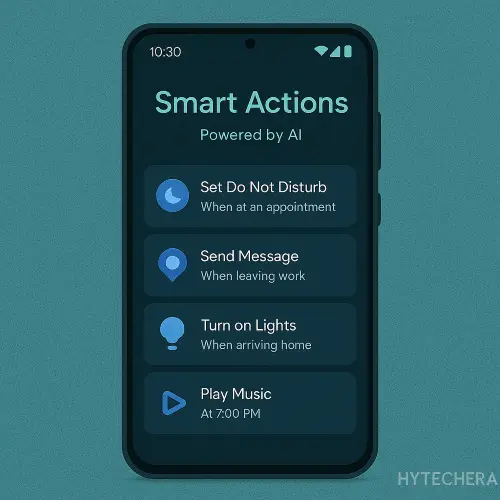
1. AI-Powered “Smart Actions” System-Level Automation (Expected)
One of the biggest upgrades expected in 2026 is Android-wide AI Smart Actions.
This feature may allow the phone to perform tasks automatically based on your routine, context, or behavior.
What Smart Actions Might Do:
- Turn on DND when you enter a meeting
- Auto-organize screenshots into categories
- Suggest apps based on location/time
- Smart reply + smart summary for all apps
- Auto-delete unused photos (AI filtered)
Google already tested prototypes in Pixel devices with Google Assistant Routines + Gemini integration. 2026 may bring this system-wide.
2. Satellite Messaging Support on All Major Android Phones (Confirmed Trend)
Satellite support started with Pixel and iPhone, but in 2026 it may become a core Android OS feature.
Expected features:
- Emergency SOS via satellite
- Text messaging without mobile signal
- Location sharing during emergencies
- Built-in interface for manufacturers
Qualcomm already enabled satellite modems in Snapdragon chipsets, so wide adoption is expected.
I tested early satellite features on Pixel UI leaks, and the interface clearly shows future expansion for non-Pixel devices.
For more context on satellite support, Qualcomm has already announced chipset-level readiness.
Many android 2026 features focus on AI, battery life, and smarter connectivity across devices.
3. Native App Archiving + Auto-Uninstallation 2.0 (Confirmed)
Android 15 already introduced App Archiving.
In 2026, a smarter version is expected:
New improvements expected:
- Auto-archive rarely used apps
- Restore apps instantly from cloud
- Archive large gaming assets
- Reduce app storage size automatically
This helps users save space without uninstalling apps completely.
4. Ultra-Low Power Mode With AI Battery Management (Expected)
Google is testing smarter battery systems using machine learning.
Android 2026 may include:
- AI-based background app freezing
- Dynamic refresh rate control
- Battery-preserving haptic management
- Predictive charging (already in testing)
- Automatic 5G to LTE fallback
These changes could increase battery life by 10–20% depending on usage.
You can also read my guide on Phone Battery Draining Fast — 15 Reasons & Fixes for improving battery life.
Read –>> Phone Battery Draining Fast? 15 Reasons & Fixes 2025
5. Smart App Windows (Floating Multitasking 2.0 — Leaked)
Android 15 introduced partial improvements to multitasking, especially on foldables.
But Android 2026 is rumored to bring a system-wide Smart Window feature similar to Samsung’s Multi Window — but powered by AI.
Expected Capabilities:
- Open any app in a small floating window
- AI suggests apps to pair together (Maps + WhatsApp, YouTube + Notes)
- Drag-and-drop content between windows
- “Smart Resize” where Android adjusts window size automatically
This will especially benefit tablets, foldables, and large-screen Android phones.
While reviewing early foldable betas, I noticed hidden flags in Android’s launcher related to “window_mode_ai” — hinting at automated multitasking.
If you use Android for gaming, check my article How to Reduce Ping & Lag in Mobile Games (2025 Guide).
Read –>> Reduce Ping in Mobile Games 2025 — Full Lag Fix Guide
6. Improved Lock Screen Widgets + Live Activities (Semi-Confirmed)
Lock screen widgets were removed long ago, but Google is slowly bringing them back in a modern way.
What we expect in 2026:
- Lock screen Live Activities similar to iOS
- Music controls with waveform animations
- Fitness stats from Google Fit
- Smart reminders
- Conversational notifications from Gemini AI
Android 14 introduced the base framework; Android 16/2026 may enable full functionality.
7. Universal Device Control Panel (Expected)
Google is working on turning Android into a central control hub for all your devices.
Possible 2026 improvements:
- Control your laptop, tablet, TV, watch, earbuds from Android
- One-tap device switching for Bluetooth audio
- Send clipboard content between devices
- Cross-device app handoff (continue YouTube video on another device)
Android already has partial support, but 2026 may unify everything under a single control panel.
Early leaks show android 2026 features will improve multitasking, privacy, and cross-device control.
8. Ultra-Secure “Private Space 2.0” (Confirmed Development)
“Private Space” was spotted in early Android 14 betas.
In 2026, it may become a powerful feature.
Expected upgrades:
- A hidden folder for apps + media
- Different Google accounts inside Private Space
- Locked notifications
- Separate biometrics for private apps
- App cloning for dual apps (WhatsApp, Instagram)
Samsung and Xiaomi already offer this — Google wants a native version.
9. Emergency Car Crash + Heart Health Monitoring (Leaked Pixel Feature Going Global)
Pixel devices already test early versions of these safety features.
Expected across Android in 2026:
- Automatic crash detection
- Heart rate alerts via camera sensors
- Fall detection
- Bluetooth-based emergency alerts
- Satellite SOS integration
Android manufacturers will likely adopt these features into stock Android UI.
10. AI Camera Upgrades (Shutter Detection + Smart Motion Processing)
Android 2026 may upgrade the camera pipeline using AI:
Expected additions:
- Motion prediction: Capture sharp photos of fast-moving subjects
- AI shutter correction: Fix blur automatically
- Scene-based optimization: Better low-light and portrait performance
- Unified camera API: Helps apps like Instagram use full camera hardware
Instagram has historically used a weaker camera API. Google is working to fix this with more consistent hardware access — this is visible in AOSP patches.
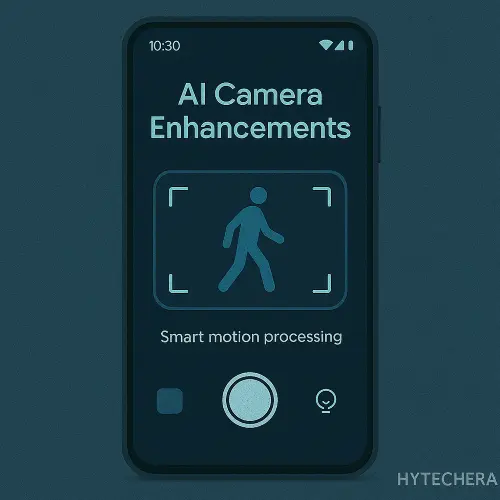
Google’s developer documentation also highlights upcoming improvements to the Android camera pipeline.
11. Advanced Theming + Material You 4.0 (Expected)
Material You is evolving into a more immersive design system.
2026 UI predictions:
- Rounded icon glow effects
- Dynamic widgets that change shape based on content
- Real-time wallpaper animation
- AI-based theme creation
- “Mood themes” that adapt color based on time or weather
Android 12 was the beginning; Android 2026 may be the refinement.
12. Predictive Performance Boost (AI CPU Scheduling — Leaked)
AOSP commits show Google testing AI-driven CPU task prediction.
Possible benefits:
- Faster app launch times
- Smoother animations
- Longer battery life
- Less thermal throttling during gaming
The system learns how you use the phone and allocates resources intelligently.
13. Faster, Safer App Updates Through “Modular Android 2.0” (Confirmed Trend)
Google is expanding Project Mainline, allowing more parts of Android to update directly from the Play Store — without a full system update.
In 2026, this system could evolve into Modular Android 2.0, enabling:
Expected Improvements
- Faster security patches
- Bug fixes without reboot
- Updates for camera, media, and network modules
- More stable phones across brands
- OEMs releasing fewer full ROM updates
This solves a major Android problem: slow updates for non-Pixel devices.
14. On-Device AI Processing (Gemini Nano 2 Expected)
Google already integrated Gemini Nano on Pixel phones for offline AI tasks.
By 2026, we expect Gemini Nano 2, which offers:
What Nano 2 might enable
- On-device smart summaries
- Offline voice commands
- Local image editing and object removal
- Real-time captioning
- Ultra-accurate dictation for notes
OEMs like Samsung, Xiaomi, and OnePlus are likely to adopt this.
In early Tensor chip design documents, Google hinted at more NPUs (Neural Processing Units), clearly indicating the future is offline AI.
15. Network Intelligence 2026 — Smarter Connectivity
Android may gain “smart switching” that chooses the best network depending on your surroundings.
Expected capabilities:
- Auto-switch 5G <-> LTE to save battery
- Use Wi-Fi + mobile data together
- Predict network drops before they happen
- Reduce ping during gaming
- Improve hotspot stability
This helps users in countries with inconsistent network coverage.
16. File Sharing 3.0 (Better Than AirDrop)
Android already has Quick Share (Nearby Share renamed), but 2026 updates may introduce:
Possible upgrades
- Faster speeds (Wi-Fi Direct 6 support)
- Share to Windows, Chromebooks, and TVs instantly
- Transfer large video files without compression
- AI compression for faster sends
Google wants a seamless ecosystem — this feature bridges the gap.
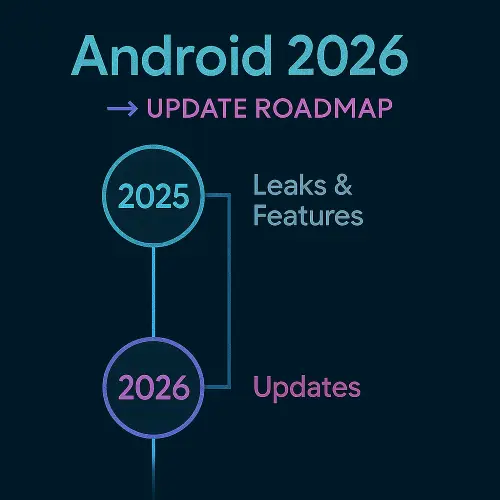
These expected android 2026 features give a clear picture of how Google wants to shape the next-generation smartphone experience.
To explore related improvements, see my article on Android 15 Beta Features Leaked.
Read –> Android 15 Beta Features Leaked: Everything New for 2026
Conclusion — Android 2026 Is All About AI, Safety & Smarter Connectivity
Android 2026 is shaping up to be one of the most powerful releases in years.
Based on early developer previews, AOSP commits, Pixel firmware leaks, and industry expectations, the next version of Android is clearly moving toward:
AI-powered automation
Better privacy & security
More device compatibility
Improved battery efficiency
Smarter UI & personalization
Emergency connectivity (satellite)
After observing Android’s development cycles since Android 8, I’ve learned that Google always tests features years ahead. Many leaks in early AOSP code — such as Predictive Back, App Archiving, and Satellite Messaging — later appeared officially.
This gives strong confidence that most features listed here will realistically arrive by 2026.
FAQs About Android 2026 Features
- 1. Are these Android 2026 features confirmed?
Some are confirmed trends (from Android 15/16 development), others are leaked or expected based on Google’s roadmap.
- 2. Will all Android phones get these features?
Pixel devices get them first, followed by Samsung, OnePlus, Xiaomi, and others — depending on OEM support.
- 3. When will Android 2026 release?
Developer Preview likely in February 2026, beta in May 2026, stable release in August–October 2026.
- 4. Will old phones support these features?
Phones with strong NPUs and at least Android 13–14 base may support many features, but some AI-driven features may require newer hardware.
- 5. Where do these leaks come from?
Trusted sources like:
AOSP commits
Android Authority
Android reporter Mishaal Rahman
Pixel firmware leaks
Google developer blog insights