With the rise of 5G-Advanced (5.5G) there is a massive technological change in the world, that brings faster speed, low latency and enhanced AI driven connectivity. This advanced 5G unlock even more possibilities, enabling smart cities, autonomous vehicles, and high speed IOT applications. In this article we are going to know about the future of 5G advanced.
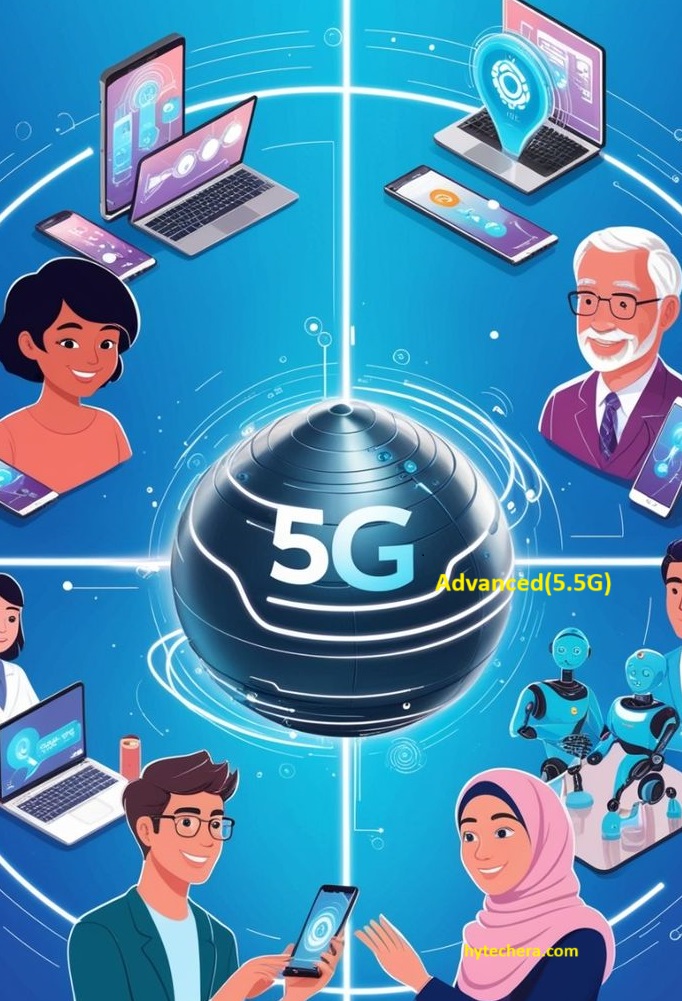
Here we explore what is 5G advanced, how it is differ from old version and how it impact on business, customers and industries in 2025.
Also read ->>> Cryptocurrency Revolution: New Era in Digital Finance
While following recent developments in mobile networks and connectivity trends, I noticed how quickly discussions have shifted from basic 5G rollout to more advanced versions like 5G-Advanced, especially in industries that depend on real-time data.
what is advanced 5G(5.5G):
Advanced 5G is also know as 5.5G which is the upgrade version of 5G. So that it increase the existing speed, efficiency, and the intelligence of wireless network. This Advanced 5G plays a important role in the evolution of mobile technology.
When I started reading about 5G-Advanced, it became clear that this upgrade is not just about higher speed, but about making networks smarter and more efficient using AI and edge computing.
Some of the key features of 5G-Advanced :
- It is faster then 5G, speeds up to 10Gbps
- 5G advanced provide a instant data transfer with ultra low latency.
- It supports billions of IoT devices
From my understanding, features like ultra-low latency and massive IoT support are the real improvements that will impact everyday services rather than just increasing download speeds.
Difference between 5G-Advanced and 5G:
| 5G | 5G-Advanced(5.5G) |
| Maximum speed 1-3Gbps | maximum speed is up to 10 Gbps |
| Latency is 10ms | latency below 10ms |
| capacity of IoT devices is millions | capacity of IoT devices is billions |
| limited in AI and edge computing | It is fully integrated with AI |
| It has moderate energy efficiency | 50% more efficient |
Huawei’s 5.5G white paper breaks down the improvements from 5G
While comparing 5G and 5G-Advanced capabilities, it becomes obvious that the focus is shifting from consumer speed to industrial-scale connectivity and automation.
Benefits of Advanced-5G in 2025:
- You can enjoy more consistent and faster internet without any buffer. Also you can experience seamless video calls even when you are in crowed areas.
- We can monitor the real-time traffic in smart cities and automated street lighting in urban development.
- It provide a instant communication with road infrastructure by enabling self driving cars.
- 5G advanced offers a robotic surgeries and Ai diagnostics without any delay .
- It provides massive IoT support from smart home to industrial automation.
Qualcomm provides a full explanation of latency, AI integration, and IoT performance
Based on how users already depend on mobile data for work, communication, and entertainment, the improvements offered by 5G-Advanced feel like a natural next step rather than a sudden leap.
How 5G-Advanced Will Impact Everyday Users in 2025
For everyday users, 5G-Advanced is not just about faster internet speeds but about a more reliable and consistent connectivity experience. Activities like video streaming, online gaming, remote work, and video calls will feel smoother even in crowded areas where networks usually struggle. As more devices connect to the network, 5G-Advanced helps maintain stable performance without sudden drops in speed or connection quality.
From daily communication to entertainment and work-related tasks, users will benefit from lower latency and better network efficiency. This means quicker app responses, improved cloud access, and fewer interruptions during critical online activities. Over time, these improvements will make mobile connectivity feel more seamless and dependable, especially as digital services continue to grow.
Usages in real world Applications:
- AI & machine learning: By using 5G-advanced, AI networks can automatically increase there speed, security and efficiency.
- Metaverse & Augmented reality(AR/VR): we can experience this technology without any delay by using 5G-advanced.
- Smart Agriculture : 5G-Advanced is very helpful in smart Agriculture to connect IoT sensors for real-time monitoring of soil, weather and crops.
- Industrial Automation: with the help of 5G factories uses AI machines for precision manufacturing.
- Emergency and disaster management: In this it is very helpful for instant communication networks for secure operations.

While exploring real-world use cases such as smart cities and industrial automation, it is easy to see how reliable low-latency networks can directly improve efficiency and safety.
Challenges of 5G-Advanced :
While 5G-Advanced is showing the signs of future success, but its global adoption faces many challenges.
- high cost for infrastructure.
- It has limited global coverage. Because it’s development is still in early stages.
- old smartphones & devices does not support due to device compatibility.
From what I have observed, infrastructure cost and device compatibility remain the biggest barriers, especially for regions where basic 5G itself is still expanding.
The future of 5G-Advanced(5.5G):
It is just the beginning, which laid roads to the foundation of 6G, which brings even more speed and AI powered networks which is expected to launch by 2030. The combination of 5G-Advanced, IoT and AI will change the entire industries that you can not imagine, making connectivity even more powerful.
Following industry roadmaps and expert discussions, it feels clear that 5G-Advanced is more of a transition phase that prepares networks for the upcoming 6G era.
Conclusion:
The transition to Advanced 5G is a game changer which unlocking the more features like fast, more connected future and smart. it brings changes to the entire industries from autonomous vehicles to smart cities and health care.
Researching emerging network technologies like 5G-Advanced highlights how connectivity is becoming the backbone of future digital innovation across industries.
Let us know your thoughts in comments for the Advanced 5G revolution !.